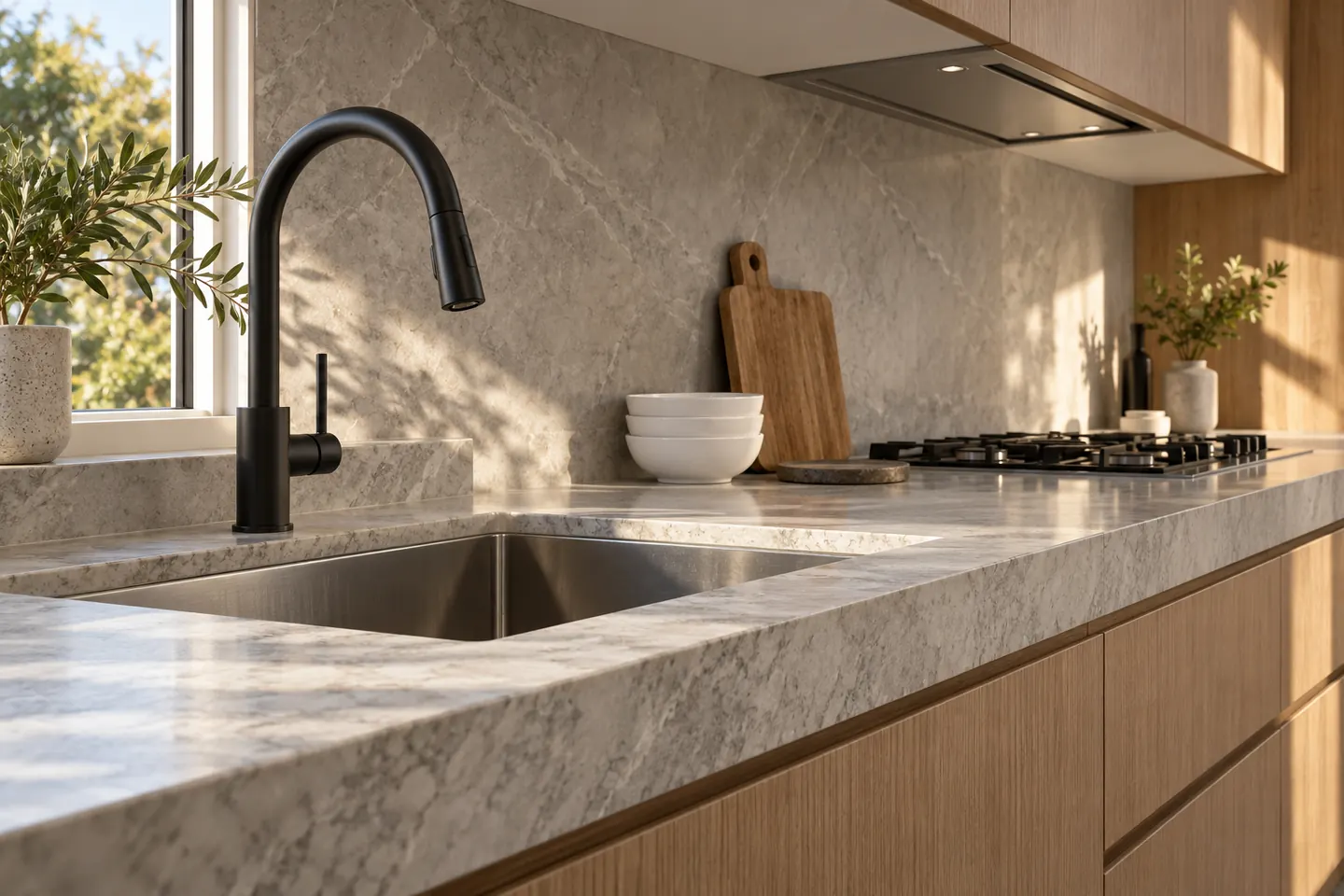
Benchtop materials, honestly compared
| Material | Holds up to | Watch out for |
|---|---|---|
| Porcelain or sintered slab | Heat, acid, scratching, UV | Chipping on exposed edges; fabrication is specialist work |
| Granite | Heat, daily family use | Needs periodic sealing; pattern varies slab to slab |
| Marble and limestone | Looks better with age, if you like patina | Etches where lemon, wine or vinegar sits; stains from oil |
| Solid surface acrylic | Seamless joins, repairable scratches | Hot pans mark it; less rigid over long spans |
| High-pressure laminate | Cost, huge range of looks | Swells if water gets into a cut edge; cannot be repaired locally |
| Stainless steel | Heat, hygiene, wok work | Shows fine scratches and fingerprints; noisy |
| Timber | Warmth, sandable and re-oilable | Needs oiling; keep it away from the sink unless you are diligent |
Edges, thickness and the details that read as expensive
A 20 mm slab with a mitred edge built down to 40 mm looks substantial without the weight or cost of a solid 40 mm top. A waterfall end on an island is one of the few details that changes a kitchen's character for a predictable amount of money. Sinks can be undermounted, top-mounted or integrated, and each option changes how you wipe crumbs off the bench for the next twenty years.
Splashbacks for kitchens that actually fry
Around Hurstville, a lot of kitchens see high-heat cooking several nights a week. That rules some splashbacks in and out quickly.
Porcelain or stone slab. A continuous surface behind the cooktop with no grout lines at all. The easiest thing in the world to wipe down, and the most expensive option.
Tiles. Endless choice, individually replaceable, and grout lines that need attention behind a wok burner. Epoxy grout is worth the extra behind the cooktop.
Toughened glass. Seamless and simple to clean, but every power point cut-out must be final before it is made.
Stainless sheet. The commercial answer. Unbeatable behind serious heat, and it suits a back kitchen better than a front one.
Full-height cabinetry-matched panels. Tidy, but check the material's heat rating against the cooktop clearance before committing.
Extraction matters more than the splashback
A splashback only deals with what lands on it. Oil that becomes airborne ends up on cornices, curtains and the ceiling. A ducted rangehood sized to the cooktop and vented outside is what keeps the rest of the house clean — the single most useful upgrade in a kitchen that cooks hot. See second and wok kitchens and layout and design.
Sequence and lead time
Benchtops are templated after the cabinets are installed, then fabricated and returned. Splashbacks follow the benchtop. That sequence is why the last fortnight of a renovation feels slow, and it is planned for in how a renovation runs. Costs by material are in the 2026 cost guide.
Call 02 4404 0245 or send your kitchen details through.
More kitchen work
Questions people ask before they commit
Why can't I have engineered stone?
Engineered stone benchtops were banned across Australia from 1 July 2024 because cutting and grinding them exposes workers to very high levels of respirable crystalline silica, which causes silicosis. The ban covers manufacture, supply and installation, so it is not a matter of preference.
What replaced it?
Sintered stone and porcelain slabs are the closest in look and hardness. Natural granite and marble, solid surface acrylic, high-pressure laminate, stainless steel and timber are all still available. Each has a different behaviour around heat, acid and impact.
What is the most practical benchtop for heavy cooking?
Porcelain or sintered slabs, or stainless steel. All three tolerate heat and are not affected by soy, vinegar, lemon or oil. Marble and other soft natural stones will etch where acid sits, which some people accept as patina and others find maddening.
Can I put a hot wok straight onto the bench?
Do not, on anything. Porcelain and stainless handle heat far better than laminate or solid surface, but thermal shock can still crack a slab near a cut-out or an edge. A trivet is cheaper than a repair.